Longchamp: The Riding-Boot Company That Became a Bag Legend
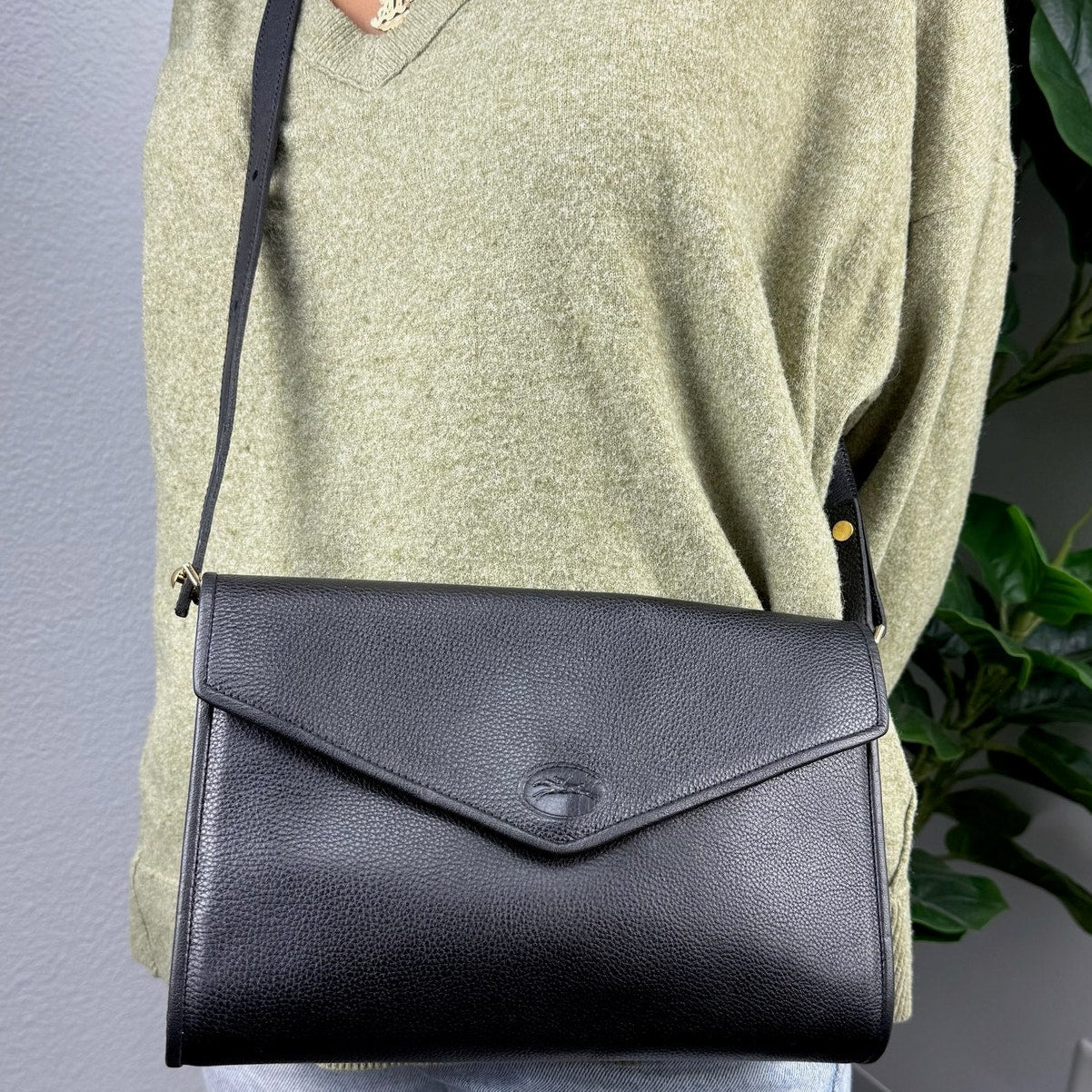
I have a Longchamp pebbled leather envelope flap crossbody in black in the shop, and I think most people have no idea how genuinely unexpected this brand's origin story is. Longchamp was founded in Paris in 1948 by Jean Cassegrain, and it actually started by making leather-covered tobacco pouches and pipe cases, not handbags at all. The name itself comes from the Longchamp horse racing track in Paris, a nod to the brand's early ties to equestrian leather goods.
That equestrian leatherworking background is exactly what shows up in the construction quality I check on a piece like this. The pebbled leather should have a consistent, structured texture, and the gold-tone hardware needs real weight and a clean, precise finish, the same standard of hardware quality that would have mattered on genuine riding equipment, where hardware failure wasn't a cosmetic issue, it was a functional one.
Stitching on the envelope flap and structural seams should be tight and even, and the leather itself should have a supple hand that comes from genuine tanning quality, not a stiff, coated feel.
What I find genuinely compelling about Longchamp's history is that the brand's entire design philosophy still traces back to solving practical, functional problems, the same instinct that led a tobacco pouch maker into leather goods in the first place. That's a very different origin story than most fashion houses, which usually start in ready-to-wear or textiles. Longchamp started by solving a genuinely practical leather problem, and that functional-first instinct is still there in the construction today.
If you appreciate a brand with a real, slightly unexpected origin story and a construction philosophy rooted in genuine function over pure decoration, Longchamp is worth knowing well beyond just its most famous folding tote.
Follow LeveLux, and catch our live shows on TikTok and Whatnot: Instagram · TikTok · Whatnot · eBay