How Gucci's Equestrian Roots Still Show Up in Every Bag
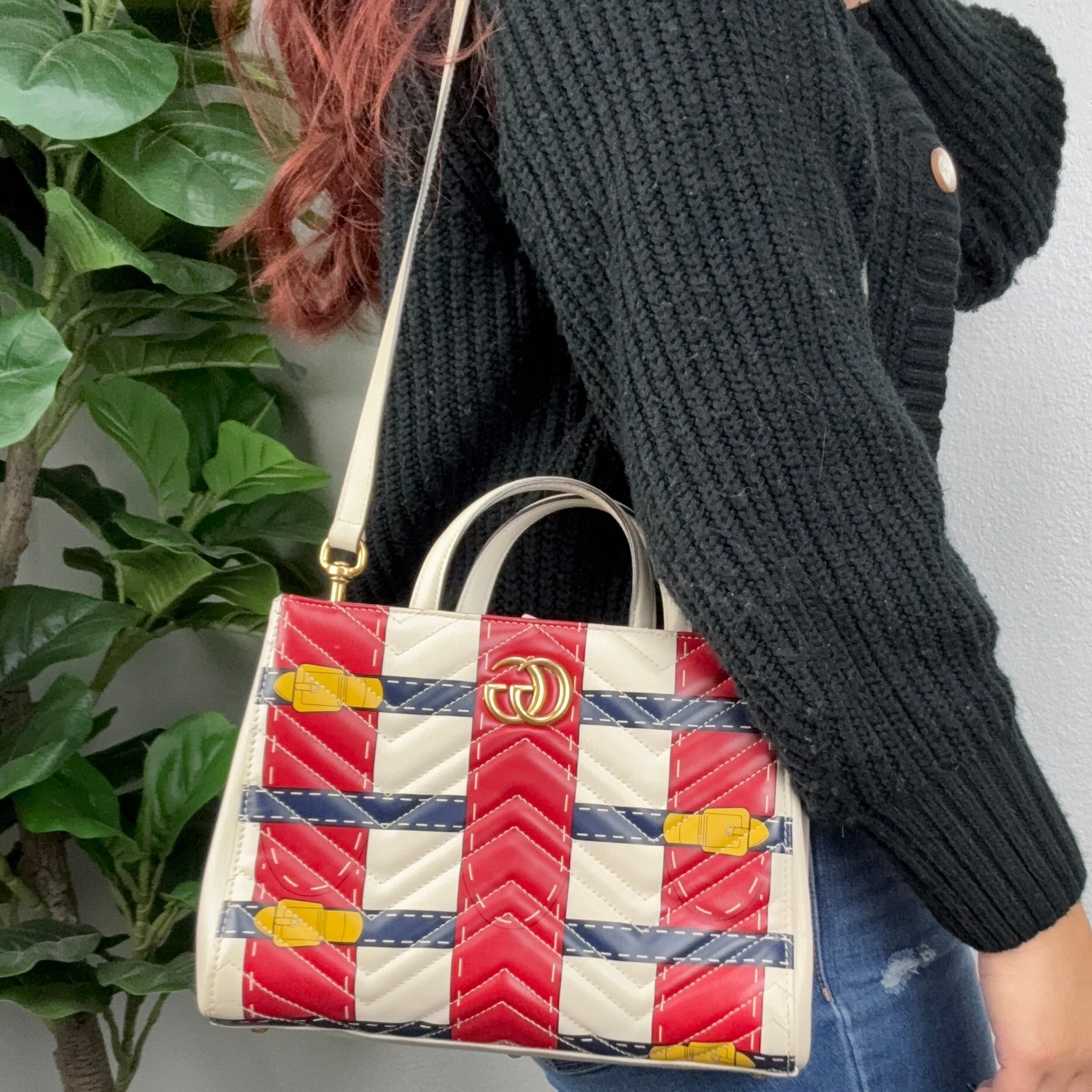
I have a Gucci GG Marmont crossbody in the shop, and I think the GG monogram gets treated as just a logo when it's actually tied to a much deeper equestrian history that shows up all over the brand's design language once you know to look for it. Gucci was founded in Florence in 1921 by Guccio Gucci, who had worked at the Savoy Hotel in London and came home inspired by the luggage and equestrian goods he'd seen wealthy travelers carrying.
That equestrian obsession is why so much of Gucci's core design vocabulary traces back to horse and saddle imagery, the interlocking GG monogram itself is a tribute to the founder's initials, but the green-red-green web stripe that appears across so many pieces is a direct reference to a saddle girth strap, and the horsebit hardware seen on classic loafers and some bag closures is literally a snaffle bit taken straight from riding tack.
When I authenticate a piece with that web stripe, exact, consistent width and crisp color separation is what I check first, no bleeding or blurring where the green and red meet. On horsebit or interlocking GG hardware, real weight and precise, clean engraving are the tells, the same standard I hold every other house to.
What I find genuinely interesting is that a design element people now see purely as a fashion signature, the web stripe, actually started as a literal, functional reference to equestrian equipment, back when the brand was making luggage and riding accessories for wealthy Florentine travelers, not yet the global fashion house it became decades later.
Knowing that history changes how I look at every Gucci piece that comes through the shop, the web stripe and horsebit hardware aren't just decoration, they're a direct thread back to a hundred-year-old obsession with equestrian craftsmanship that's still baked into the brand's design DNA today.
Follow LeveLux, and catch our live shows on TikTok and Whatnot: Instagram · TikTok · Whatnot · eBay